The Siamese Cat
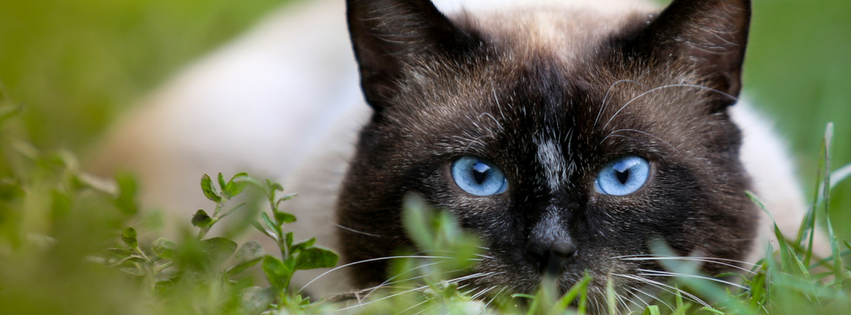
The Siamese is one of the most beloved and well-known cat breeds.
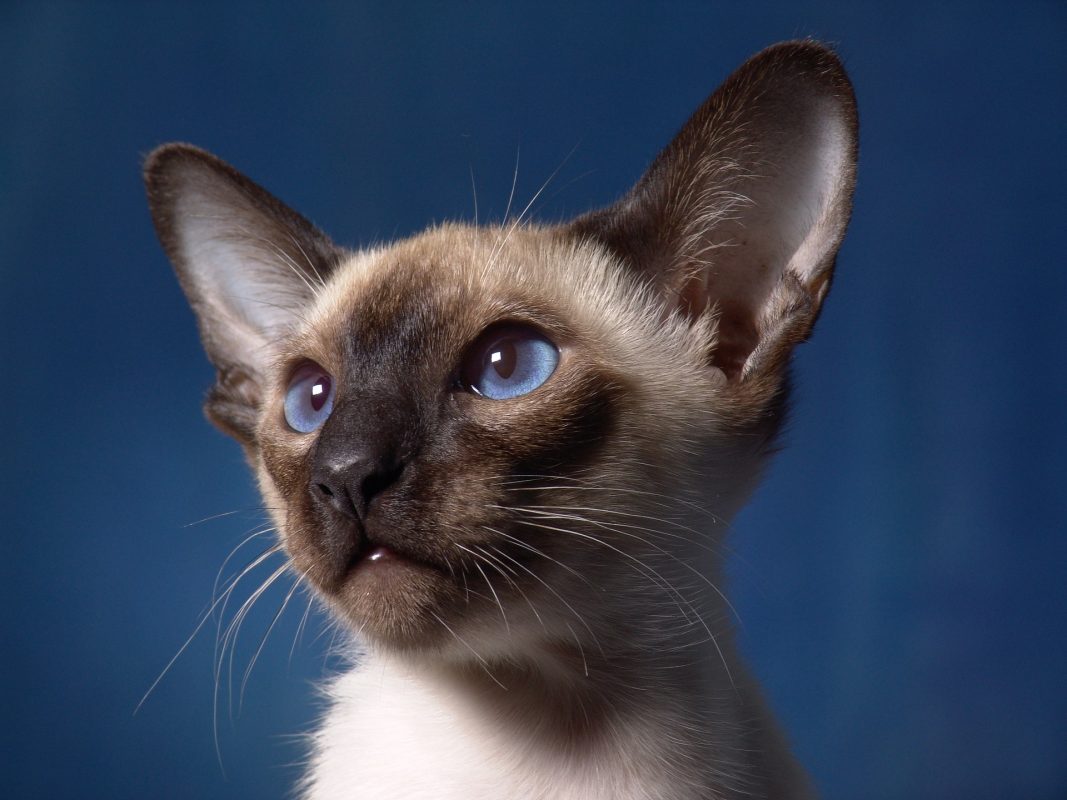
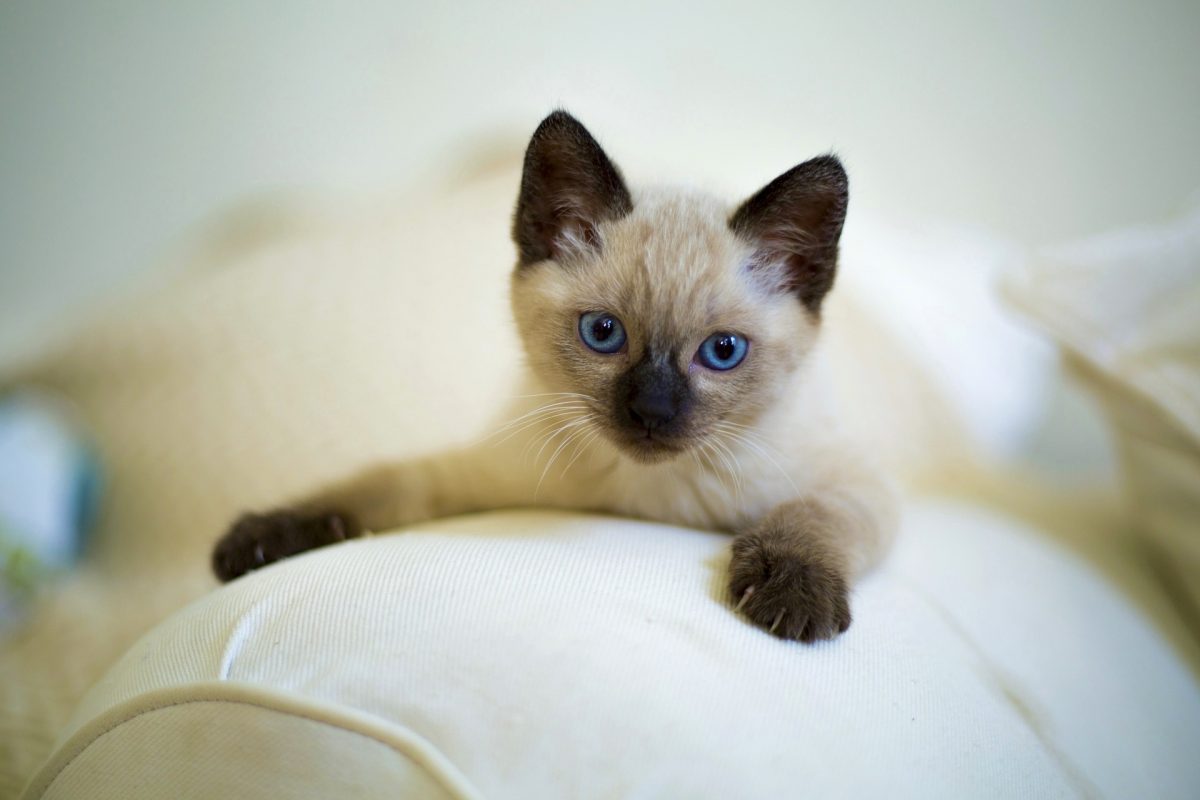
It has large, elegant blue eyes, a triangular face and pointed ears.
One of the most striking features is their loud meow, to attract attention and ask their owners for company.
Know some of the curiosities of this breed that we love so much!
provenance
It is believed that the Siamese cat comes from Southeast Asia, more specifically from Siam, in what is currently Thailand.
They were royal cats and kept in sacred temples.
In the 19th century, they were taken to England and from there they spread all over the world.
American President Rutherford was offered a Siamese cat, which made the breed one of the most popular in Europe and North America.
Today's Siamese cats are quite different compared to the original Siamese cat - currently known as Thai - being that this one was more massive and round, had green eyes, could be more cross-eyed and have a knot in the tail.
Features
Size:
Medium sized cat. He is usually thin but muscular.
The ideal weight of an adult Siamese is between 3 and 6 kg, and an average height of 20 cm.
Females weigh between 3 and 4 kg, while the male must weigh between 4 and 5 kg.
Eyes:
They are almond-shaped and usually have blue eyes.
Coat:
They have short and soft fur, easy to care for.
The color of the coat changes throughout life, with the final coat between 5 and 8 months of age.
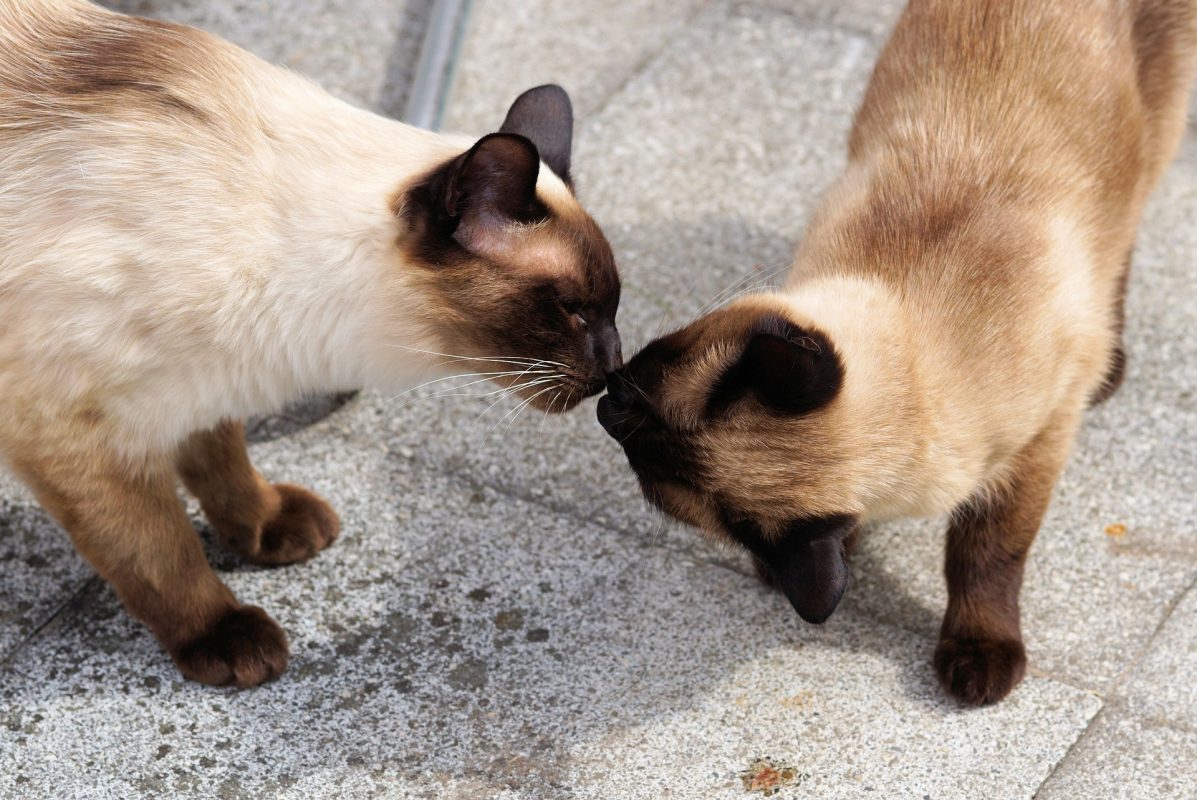
When they are born they are white and as they grow they become darker at the ends – on the snout, tail, ears and paws.
Average life expectancy:
A Siamese usually lives between 15 and 20 years old.
Behavior
Gentlemen and Faithful:
As a rule, we think that cats are distant and independent animals.
But in Siamese cats these characteristics are not verified.
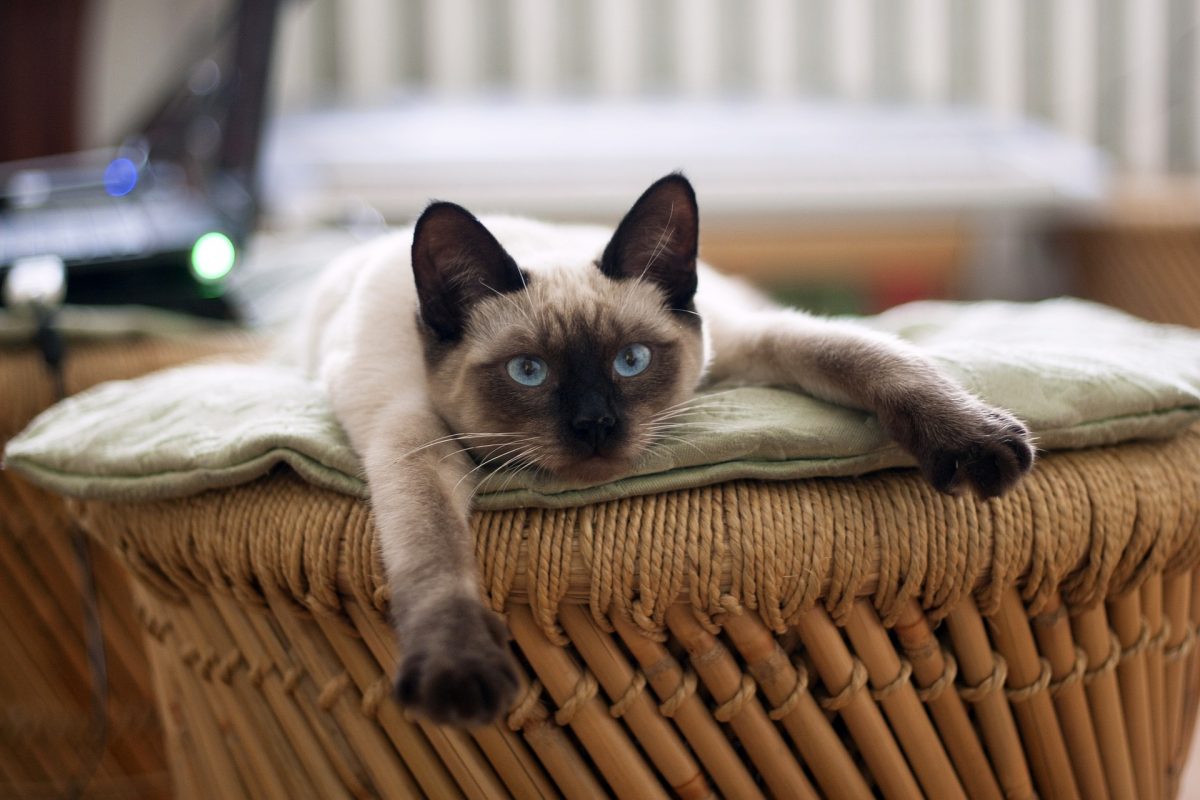
They are cats that constantly ask for the attention of their owners, being in most cases quite sociable and curious cats.
Acute Meow:
This is a cat who likes to express himself! As? Meowing.
The Siamese cat meows for a thousand reasons: either because he is happy and happy, or because he wants our attention, because he wants to eat, because we wake him up…
When it comes to a cat in heat, meowing can be even more annoying.
The owner of a Siamese has to be very patient and tolerant and not bother with his cat constantly “talking”.
Unpredictable Temperament:
We cannot forget that the Siamese is a cat attached to its owner, which can make it jealous and possessive.
It is important that we get our little friend used to living with other animals and dealing with other people from an early age.
In this way, we manage to attenuate the feeling of possession that you may feel for us.
Intelligence:
If we dedicate time to training our Siamese from a young age, being very affectionate, we can make him an obedient cat.
As it is quite intelligent, it easily learns tricks or even to walk on a leash.
Company Cat:
Siamese are cats that don't handle loneliness well.
If we have to leave him alone at home, it is important that he has toys, scratching posts or balls with food.
All these are options that will entertain you during the day.
Having accessories that smell like CATINIP – the grass that cats love – will help our cat to bond more with their toys and not focus on ruining curtains or sofas.
 |  |
Health
Strabismus:
It is a condition that Siamese cats are affected more than other breeds.
Although quite visible, it does not affect the cat's vision.
Asthma:
Obese cats, and in particular Siamese cats, are more vulnerable to asthma.
We must treat them so that they do not have respiratory failure and, to prevent this, we must ensure that our cat is not in an environment with a lot of dust or smoke.
Fur Balls:
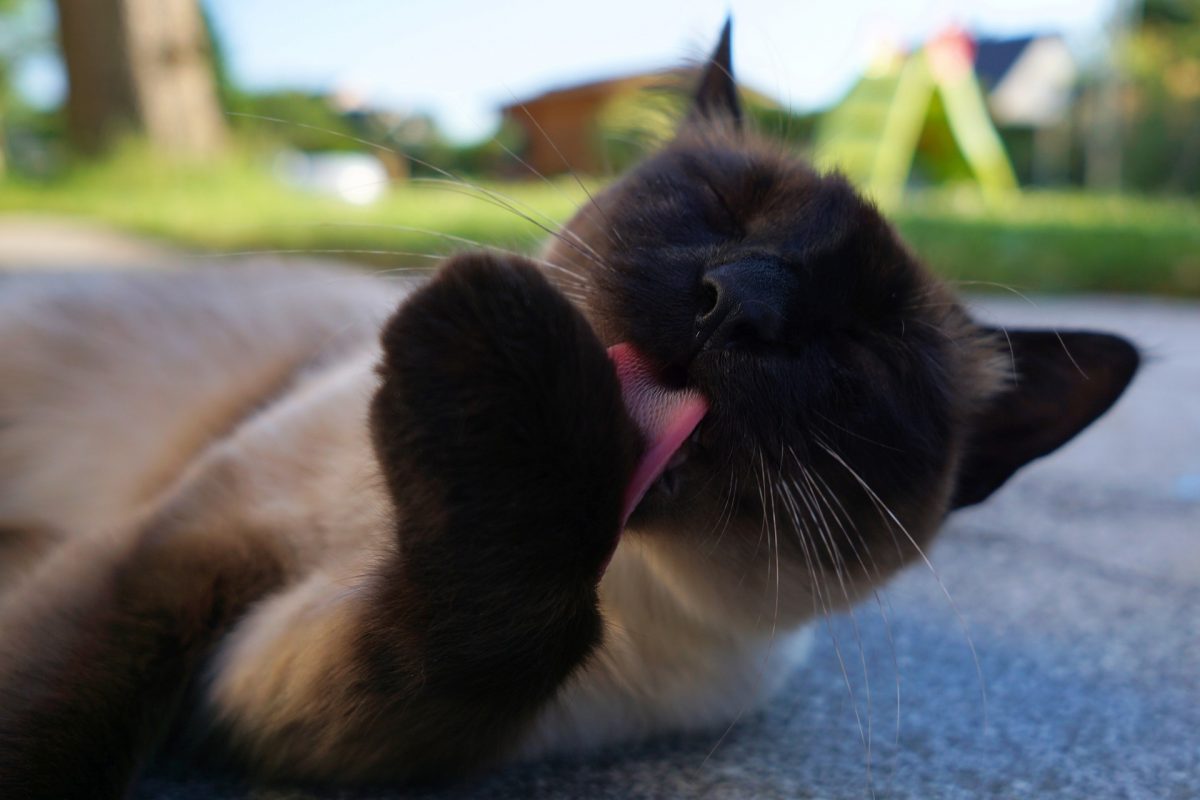
Despite being a short-haired cat, the Siamese is a cat whose fur sheds very often.
To prevent stomach problems resulting from the ingestion of hairballs, we must brush our cat regularly.
Heart disease:
It is common for Siamese cats to have a heart condition that is hereditary – dilated cardiomyopathy.
The ideal is to consult with our veterinarian, in order to monitor the problem and indicate an adequate diet.
hydration:
This is a problem that crosses all cats.
We must always pay attention to whether our cat drinks water regularly.
This is one of the measures that prevents our little friend from having urinary system problems.
To help, we can provide wet food regularly or even have a source so that there is always running water.
They love it and their health will thank you!
Castration:
If we don't want our cat to breed, neutering it is a good option.
This measure will help in other aspects of our animal's life:
- Makes male cats lose the habit of marking territory;
- Helps the females to stop being stressed and with a more unbearable meow, which usually happens at the time of estrus.


 Free shipping in 24-48h for orders over 49 €!
  Client Support:
  WhatsApp