
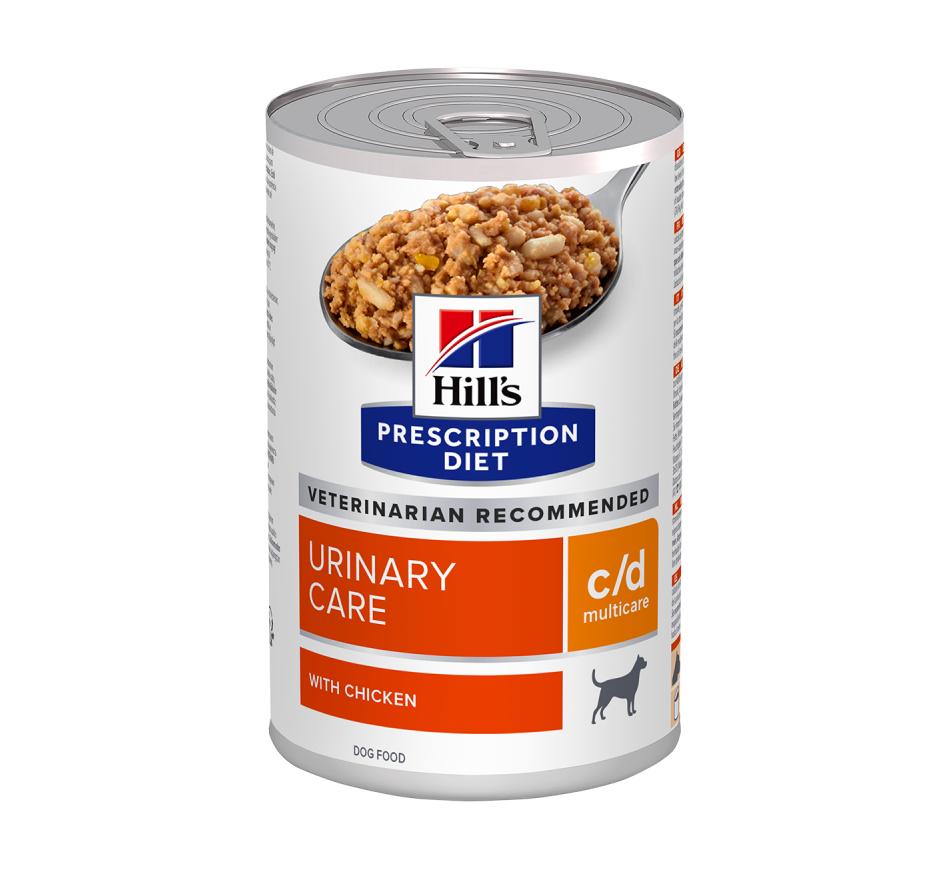
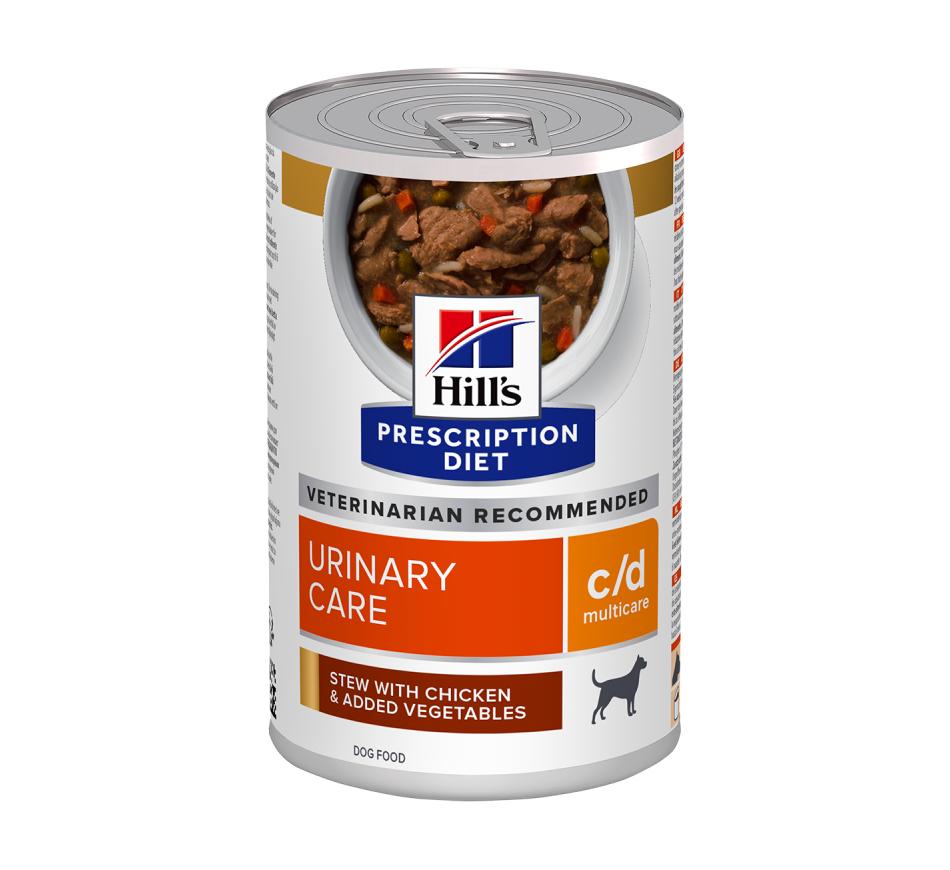
Complete dietetic food for dogs, the administration of which dissolves struvite stones and prevents their formation.
It has a limited level of high-quality protein, urine-acidifying properties, and a reduced magnesium content.
For the proper functioning of the entire organism, it is necessary to effectively eliminate unnecessary metabolic waste products that occur with the participation of the kidneys. Various types of unnecessary metabolites, such as urea, creatinine, electrolytes, proteins, and minerals, are expelled from the body through urine.
When urine is highly saturated with minerals, deposits can form under the right conditions. Initially, these are microscopic crystals that, as a result of aggregation and layering, can crystallize into urinary stones.
The most common urinary calculi are struvite (magnesium ammonium phosphate) stones and so-called oxalate or calcium oxalate stones. The formation of individual types of stones is influenced by several factors; struvitosis in dogs is the result of urinary tract infections with urease-positive Staphylococcus and Proteus spp.

Complete dietetic food for dogs, the administration of which dissolves struvite stones and prevents their formation.
Complete dietetic food for dogs, the administration of which dissolves struvite stones and prevents their formation.
Complete dietetic food for dogs, the administration of which dissolves struvite stones and prevents their formation.
It has a limited level of high-quality protein, urine-acidifying properties, and a reduced magnesium content.
For the proper functioning of the entire organism, it is necessary to effectively eliminate unnecessary metabolic waste products that occur with the participation of the kidneys. Various types of unnecessary metabolites, such as urea, creatinine, electrolytes, proteins, and minerals, are expelled from the body through urine.
When urine is highly saturated with minerals, deposits can form under the right conditions. Initially, these are microscopic crystals that, as a result of aggregation and layering, can crystallize into urinary stones.
The most common urinary calculi are struvite (magnesium ammonium phosphate) stones and so-called oxalate or calcium oxalate stones. The formation of individual types of stones is influenced by several factors; struvitosis in dogs is the result of urinary tract infections with urease-positive Staphylococcus and Proteus spp.
 Free shipping in 24-48h for orders over 49 €!
  Client Support:
  WhatsApp