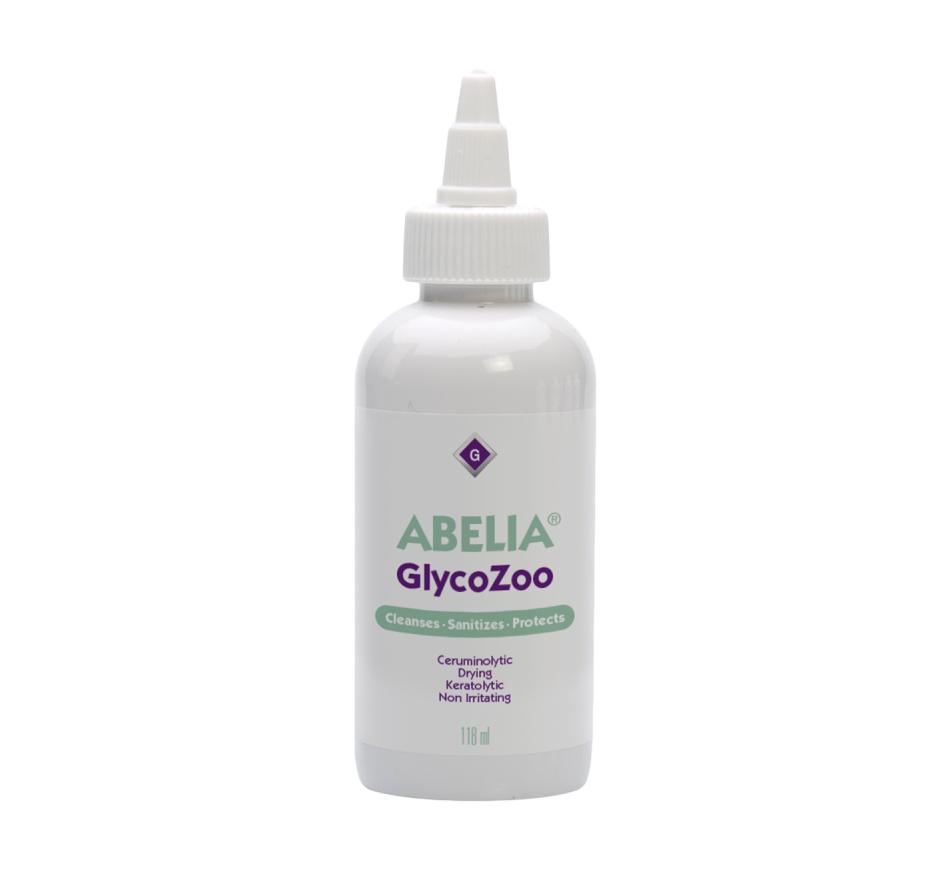
Abelia Glycozoo | NewPet

Water-based, non-irritating optical and dermatological solution with cerumenolytic, keratolytic, drying and moisturizing action, indicated for dogs, cats and horses.

Drying, keratolytic, lipolytic optical solution with an acidic pH that helps maintain the natural microbial balance of the ears, suitable for use in animals predisposed to otitis.

Abelia Glycozoo is a non-toxic, antibiotic-free product.


Recommended Uses
- Cerumenolytic, lipolytic, drying and acidifying action.
- Lipolytic effect, useful in ears with excess sebum.
- Exfoliating action that promotes epithelial renewal, eliminates debris, and allows for better contact with active ingredients.
- Especially useful in anatomical locations with a moist environment.
- Preventive ear canal drying agent (e.g., may help prevent ear infections in swimming dogs).
- Ears with a bad odor.

Mechanisms of action:

Boric acid has a drying action, a characteristic that makes it particularly useful when the ear canal is moist.
Glycolic acid is a naturally occurring, soluble acid with lipolytic and keratolytic properties.

External otitis is a common condition seen in small animal veterinary clinics, affecting 15-20% of dogs and 5-7% of cats.
There may be predisposing factors that will increase the likelihood of developing it. These factors are divided into: primary factors, which trigger the process; secondary factors, which aggravate it; and perpetuating factors, which prevent its resolution.
Bacterial and fungal infections are included among the secondary factors.
External otitis occurs due to the persistence or recurrence of local causal factors, such as polyps or tumors, or general factors, such as atopy, dermatitis, or seborrhea.
The continuous cycle of infection and inflammation can lead to stenosis of the ear canal, hindering the drainage of secretions and allowing the proliferation of infectious agents, such as yeasts and bacteria.
The development of otitis usually occurs due to a combination of different causes and factors. Primary causes can trigger otitis externa on their own, because they modify the auditory environment creating ideal conditions for secondary infections to develop, while secondary causes are those that produce it in an abnormal or altered ear canal.
Erythematous otitis externa is the most common type, while suppurative otitis is rarer.
Proper ear canal cleaning has several benefits. The presence of exudate not only hinders otoscopic examination but also prevents therapy from being effective, as exudates and inflammatory debris can inactivate some medications and prevent contact with the epithelium. Cleaning removes microorganisms, bacterial toxins, cellular debris, and fatty acids, also reducing inflammation. It is also a primary treatment when epithelial migration fails, as it prevents the accumulation of cerumen and debris that can alter the ear canal environment and promote secondary infection by bacteria or yeast.
Hypersensitivity reactions, such as atopy, food allergy, and contact dermatitis, are the main primary causes of otitis externa, and among them, atopy appears to be the most common cause of chronic canine otitis. It is estimated that 55% of atopic dogs develop otitis externa, and in many cases, it is the only clinical sign.
There are some predisposing factors that increase the moisture in the ear canal, leading to maceration and microbial growth.


Some of these predisposing factors include:
- Anatomical conformation of the external ear (e.g., ear canals with excessive hair or stenotic).
- Excessive humidity due to the presence of water or environmental factors.
- Obstruction of the ear canal (e.g., polyps).
Systemic diseases.
- Consequences of treatment (e.g., changes in normal microflora or trauma from inadequate cleaning).

Composition:
Boric Acid 2%
Glycolic Acid 2%

Instructions for Use:
- Carefully apply ABELIA® GlycoZoo until the ear canal is full (1 to 5 ml is needed depending on the breed).
- Gently massage the base of the ear for a few seconds.
- Remove excess solution with gauze or a paper towel.

Initial: 1-2 times/day.
Maintenance: 1-2 times/week.

You need to be authenticated and have bought this product so you can comment on it.
Brand
Abelia Glycozoo
24,99 €
9 NewPet Points

Water-based, non-irritating optical and dermatological solution with cerumenolytic, keratolytic, drying and moisturizing action, indicated for dogs, cats and horses.

From
24,99 €
x
Price
24,99 €
Volume
9 NewPet Points
Brand
Abelia Glycozoo

Water-based, non-irritating optical and dermatological solution with cerumenolytic, keratolytic, drying and moisturizing action, indicated for dogs, cats and horses.

9 NewPet Points

Water-based, non-irritating optical and dermatological solution with cerumenolytic, keratolytic, drying and moisturizing action, indicated for dogs, cats and horses.

Drying, keratolytic, lipolytic optical solution with an acidic pH that helps maintain the natural microbial balance of the ears, suitable for use in animals predisposed to otitis.

Abelia Glycozoo is a non-toxic, antibiotic-free product.


Recommended Uses
- Cerumenolytic, lipolytic, drying and acidifying action.
- Lipolytic effect, useful in ears with excess sebum.
- Exfoliating action that promotes epithelial renewal, eliminates debris, and allows for better contact with active ingredients.
- Especially useful in anatomical locations with a moist environment.
- Preventive ear canal drying agent (e.g., may help prevent ear infections in swimming dogs).
- Ears with a bad odor.

Mechanisms of action:

Boric acid has a drying action, a characteristic that makes it particularly useful when the ear canal is moist.
Glycolic acid is a naturally occurring, soluble acid with lipolytic and keratolytic properties.

External otitis is a common condition seen in small animal veterinary clinics, affecting 15-20% of dogs and 5-7% of cats.
There may be predisposing factors that will increase the likelihood of developing it. These factors are divided into: primary factors, which trigger the process; secondary factors, which aggravate it; and perpetuating factors, which prevent its resolution.
Bacterial and fungal infections are included among the secondary factors.
External otitis occurs due to the persistence or recurrence of local causal factors, such as polyps or tumors, or general factors, such as atopy, dermatitis, or seborrhea.
The continuous cycle of infection and inflammation can lead to stenosis of the ear canal, hindering the drainage of secretions and allowing the proliferation of infectious agents, such as yeasts and bacteria.
The development of otitis usually occurs due to a combination of different causes and factors. Primary causes can trigger otitis externa on their own, because they modify the auditory environment creating ideal conditions for secondary infections to develop, while secondary causes are those that produce it in an abnormal or altered ear canal.
Erythematous otitis externa is the most common type, while suppurative otitis is rarer.
Proper ear canal cleaning has several benefits. The presence of exudate not only hinders otoscopic examination but also prevents therapy from being effective, as exudates and inflammatory debris can inactivate some medications and prevent contact with the epithelium. Cleaning removes microorganisms, bacterial toxins, cellular debris, and fatty acids, also reducing inflammation. It is also a primary treatment when epithelial migration fails, as it prevents the accumulation of cerumen and debris that can alter the ear canal environment and promote secondary infection by bacteria or yeast.
Hypersensitivity reactions, such as atopy, food allergy, and contact dermatitis, are the main primary causes of otitis externa, and among them, atopy appears to be the most common cause of chronic canine otitis. It is estimated that 55% of atopic dogs develop otitis externa, and in many cases, it is the only clinical sign.
There are some predisposing factors that increase the moisture in the ear canal, leading to maceration and microbial growth.


Some of these predisposing factors include:
- Anatomical conformation of the external ear (e.g., ear canals with excessive hair or stenotic).
- Excessive humidity due to the presence of water or environmental factors.
- Obstruction of the ear canal (e.g., polyps).
Systemic diseases.
- Consequences of treatment (e.g., changes in normal microflora or trauma from inadequate cleaning).

Composition:
Boric Acid 2%
Glycolic Acid 2%

Instructions for Use:
- Carefully apply ABELIA® GlycoZoo until the ear canal is full (1 to 5 ml is needed depending on the breed).
- Gently massage the base of the ear for a few seconds.
- Remove excess solution with gauze or a paper towel.

Initial: 1-2 times/day.
Maintenance: 1-2 times/week.

You need to be authenticated and have bought this product so you can comment on it.