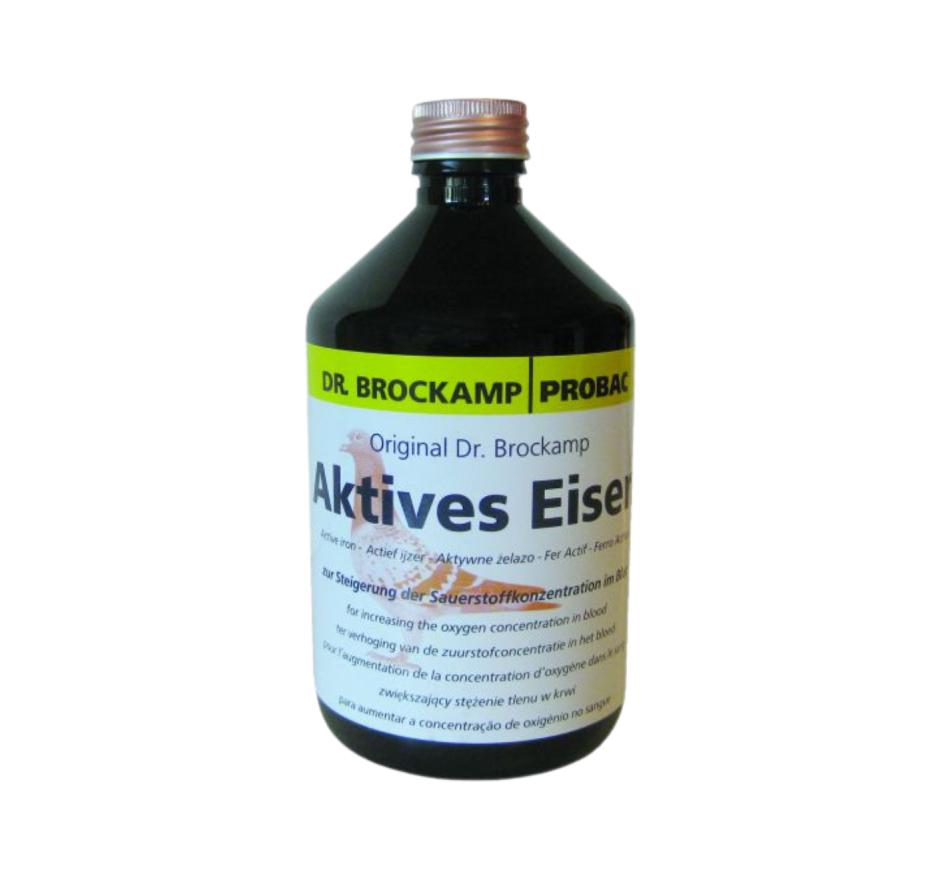
Aktives Eissen Dr. Brockamp
As an important component of blood hemoglobin, iron helps red blood cells transport oxygen. Hemoglobin binds to inhaled oxygen and transports it to the body's cells.
The need for iron increases particularly during periods of great physical demand, such as competitions, reproduction and molting. A lack of iron is, therefore, one of the most common deficiency symptoms in our flyers. The immediate consequence is a reduction in hemoglobin, which leads to an insufficient supply of oxygen to the entire body.
The homing pigeon extracts its flight energy mainly from lipid metabolism. As a comparison, the preparation of energy from lipid metabolism requires much more oxygen than is used by a human's carbohydrate consumption. A sufficiently high concentration of hemoglobin in the blood is therefore a decisive factor for good performance.
Active Iron promotes hematopoiesis, particularly increases the number of red blood cells, improves the concentration of oxygen in the blood and, therefore, accelerates the transport of oxygen to cells (mitochondria). Just after a few days of use, the level of iron in the blood (hematocrit level) increases significantly and leads to a natural improvement in performance in competitions.
Diseases in the digestive and intestinal tract prevent the absorption of iron. A very low oxygen content in the gastric juice or changes in the mucosa in the upper small intestine as well as suffering from pathogenic bacteria can be the causes of this. Therefore, it must be absolutely ensured that the natural intestinal flora of the homing pigeon remains intact.
1 liter of Active Iron contains 22 g of a specific organically bound iron chelate complex. This special form of iron is by far much better reabsorbed by the pigeon, in direct comparison with other preparations.
Usage recommendations
- With the start of training, approximately 3 to 4 weeks before the start of the sporting campaign, Active Iron should be administered twice a week through drinking water or feed in order to fill iron reserves in a timely manner.
- It should also be administered during reproduction and molting periods, at least once a week.
Recommended dosage
5 ml of Active Iron for 1 liter of water or 1 kg of daily feed for 25 pigeons.

Active Iron (organically bound iron chelate complex) to increase blood oxygen concentration
Active Iron (organically bound iron chelate complex) to increase blood oxygen concentration
Aktives Eissen Dr. Brockamp
As an important component of blood hemoglobin, iron helps red blood cells transport oxygen. Hemoglobin binds to inhaled oxygen and transports it to the body's cells.
The need for iron increases particularly during periods of great physical demand, such as competitions, reproduction and molting. A lack of iron is, therefore, one of the most common deficiency symptoms in our flyers. The immediate consequence is a reduction in hemoglobin, which leads to an insufficient supply of oxygen to the entire body.
The homing pigeon extracts its flight energy mainly from lipid metabolism. As a comparison, the preparation of energy from lipid metabolism requires much more oxygen than is used by a human's carbohydrate consumption. A sufficiently high concentration of hemoglobin in the blood is therefore a decisive factor for good performance.
Active Iron promotes hematopoiesis, particularly increases the number of red blood cells, improves the concentration of oxygen in the blood and, therefore, accelerates the transport of oxygen to cells (mitochondria). Just after a few days of use, the level of iron in the blood (hematocrit level) increases significantly and leads to a natural improvement in performance in competitions.
Diseases in the digestive and intestinal tract prevent the absorption of iron. A very low oxygen content in the gastric juice or changes in the mucosa in the upper small intestine as well as suffering from pathogenic bacteria can be the causes of this. Therefore, it must be absolutely ensured that the natural intestinal flora of the homing pigeon remains intact.
1 liter of Active Iron contains 22 g of a specific organically bound iron chelate complex. This special form of iron is by far much better reabsorbed by the pigeon, in direct comparison with other preparations.
Usage recommendations
- With the start of training, approximately 3 to 4 weeks before the start of the sporting campaign, Active Iron should be administered twice a week through drinking water or feed in order to fill iron reserves in a timely manner.
- It should also be administered during reproduction and molting periods, at least once a week.
Recommended dosage
5 ml of Active Iron for 1 liter of water or 1 kg of daily feed for 25 pigeons.
 Free shipping in 24-48h for orders over 49 €!
  Client Support:
  WhatsApp