
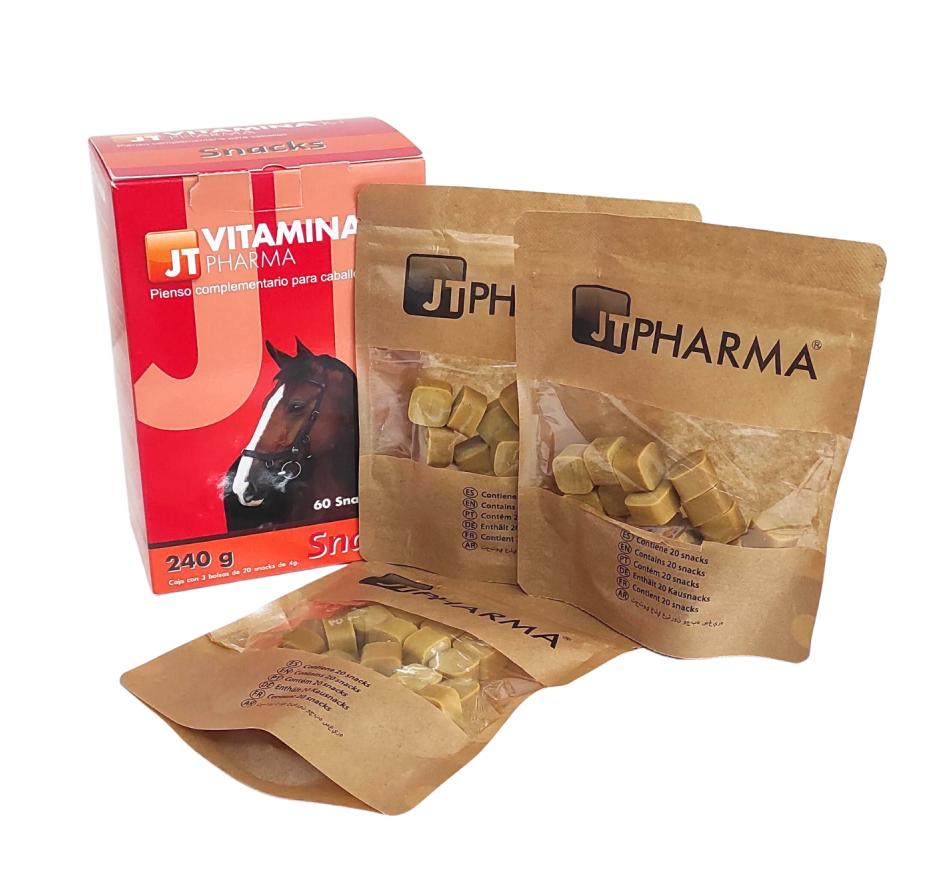
JT Vitamin K1 or Phytomenadione is a fat-soluble vitamin acquired mainly through the ingestion of green leafy vegetables. It is stored in the liver, but not for very long. Its deficiency can cause hemorrhages. It contributes to the formation of coagulation factors (since it is necessary for the activation of four coagulation factors), has an anti-hemorrhagic action and has a positive effect on the metabolism of bone cartilage (including osteocalcin, which is responsible for facilitating bone mineralization).
JT Vitamin K1 snack is used in cases of vitamin K deficiency, liver failure, and prolonged use of antibiotics, anticonvulsants, and NSAIDs, or poisoning from rodenticides of the coumarin family where there is a decrease and dysfunction of coagulation factors. It is also used in cases of nosebleeds due to blood parasites such as Leishmania and Ehrlichia canis. It helps with bleeding from wounds, cuts, or spontaneous bleeding.
Vitamin K1 - Vitamin K is essential in both mammals and photosynthetic organisms (bacteria, algae, plants), so green leafy vegetables are the main source of vitamin K for horses.
On the other hand, equines have a digestive tract with an important and extensive microbiota, whose fermentative function is essential for digestion and nutrient synthesis.
When is it used?
- Helps with vitamin K deficiencies in horses with liver or intestinal disorders.
- It stimulates the activation of vitamin K-dependent coagulation factors.
- Promotes bone stability and improves bone turnover.

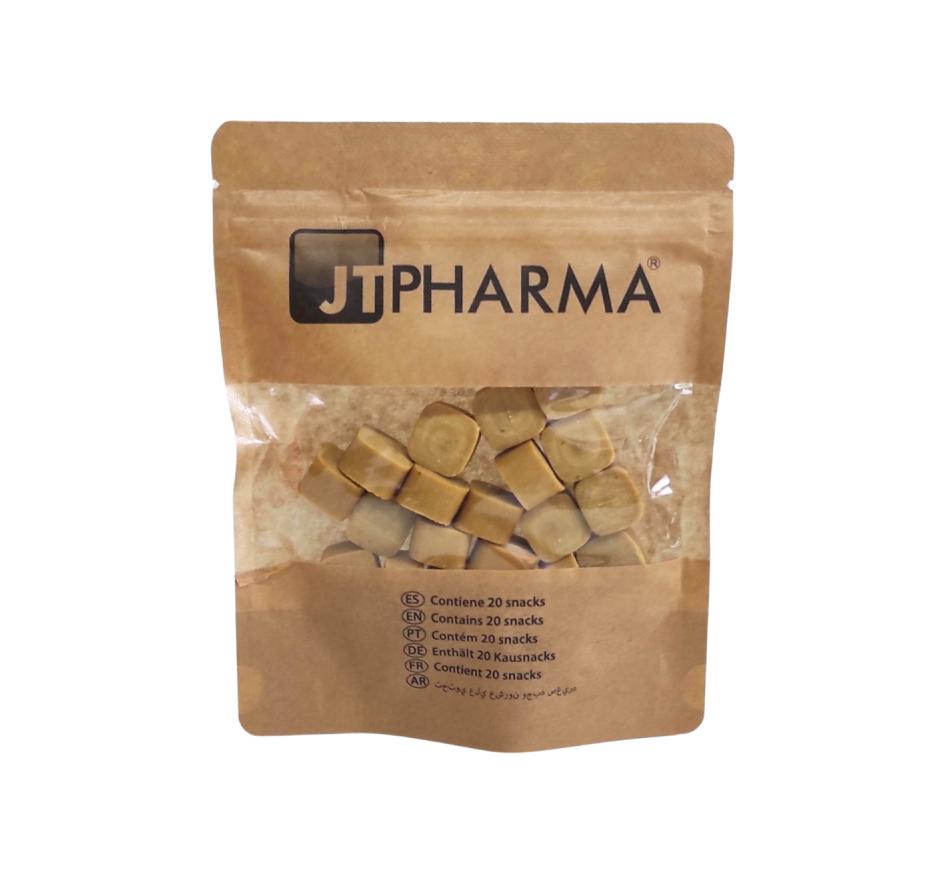
Complementary food, in snack form, with 50mg of Phytomenadione (Vitamin K1) indicated for horses and other species with Vitamin K1 requirements.
Complementary food, in snack form, with 50mg of Phytomenadione (Vitamin K1) indicated for horses and other species with Vitamin K1 requirements.
JT Vitamin K1 or Phytomenadione is a fat-soluble vitamin acquired mainly through the ingestion of green leafy vegetables. It is stored in the liver, but not for very long. Its deficiency can cause hemorrhages. It contributes to the formation of coagulation factors (since it is necessary for the activation of four coagulation factors), has an anti-hemorrhagic action and has a positive effect on the metabolism of bone cartilage (including osteocalcin, which is responsible for facilitating bone mineralization).
JT Vitamin K1 snack is used in cases of vitamin K deficiency, liver failure, and prolonged use of antibiotics, anticonvulsants, and NSAIDs, or poisoning from rodenticides of the coumarin family where there is a decrease and dysfunction of coagulation factors. It is also used in cases of nosebleeds due to blood parasites such as Leishmania and Ehrlichia canis. It helps with bleeding from wounds, cuts, or spontaneous bleeding.
Vitamin K1 - Vitamin K is essential in both mammals and photosynthetic organisms (bacteria, algae, plants), so green leafy vegetables are the main source of vitamin K for horses.
On the other hand, equines have a digestive tract with an important and extensive microbiota, whose fermentative function is essential for digestion and nutrient synthesis.
When is it used?
- Helps with vitamin K deficiencies in horses with liver or intestinal disorders.
- It stimulates the activation of vitamin K-dependent coagulation factors.
- Promotes bone stability and improves bone turnover.
 Free shipping in 24-48h for orders over 49 €!
  Client Support:
  WhatsApp