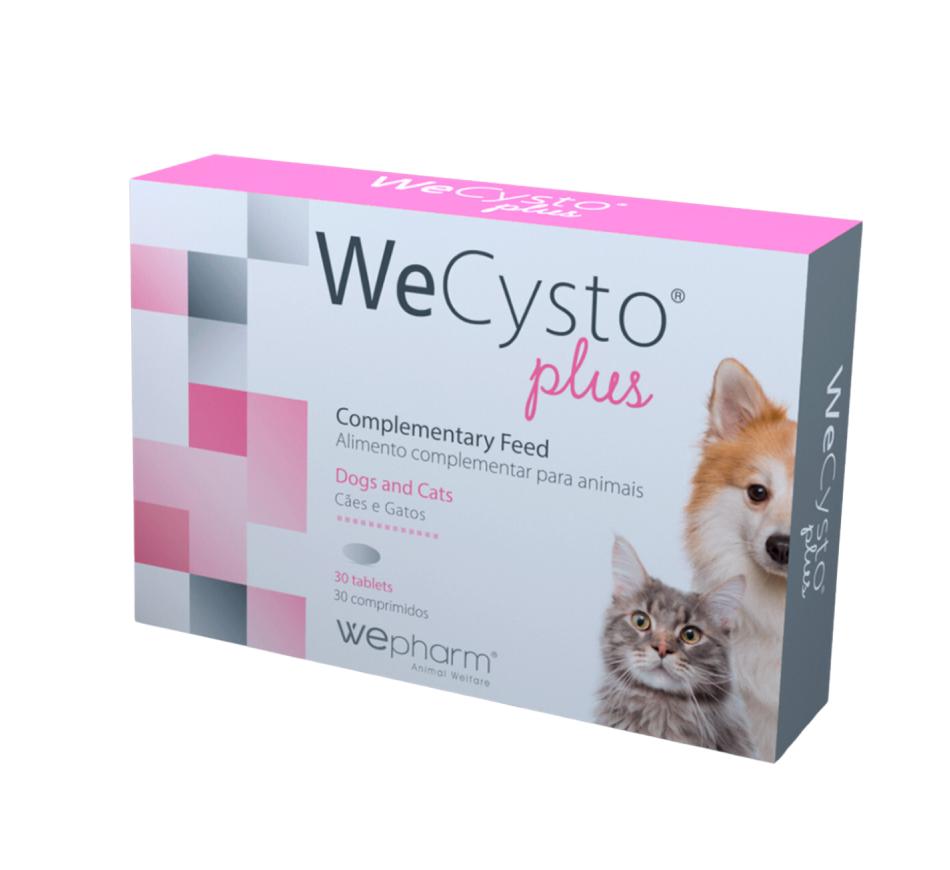
WeCysto® Plus is a complementary food developed to support urinary function, namely in the inner lining of the bladder and in inhibiting the fixation of bacteria in the urinary tract.
WeCysto® Plus Gel also contains ingredients to reduce and control stress levels, common in cats.
Wecysto Plus exists in two different options:
- In edible gel with 50 ml dosing bottle, for cats.
- In palatable tablets, 30 palatable tablets, for cats and dogs.
Cystitis is an inflammation of the bladder, which can have several causes, including bacteria, stress, “plugs”, defects in the protective layer of the bladder (Glucosaminoglycans – GAG's) and even neoplasms or polyps.
The most common causes of this inflammation vary according to species, gender and age. In the case of cats, compared to humans and dogs, cystitis is more common in the ages of less than 10 years, affecting equally females and males (being that in males it is an urgent situation due to the risk of obstruction).
Normally, cats that develop this type of pathology live in a house with no access to the outside, with several cats, are based on dry food and often have a weight higher than indicated for their height.
In young cats, about 75% of cystitis originates from “plugs” or stress (idiopathic cystitis), stones are responsible for 20% and only 5% are bacterial in origin. In senior dogs and cats, the main origin for this pathology is bacterial.
Cystitis is often idiopathic:
Treatment of cystitis depends on its cause:
- Urolithiasis requires removal and/or dissolution of stones
- Bacterial infections require the use of a suitable antibiotic
- Idiopathic involve a multimodal environmental modification (MEMO)
Treatment should always be Multifactorial
In feline cystitis, being a pathology with a strong component associated with stress, treatment should always be multifactorial:
- Environmental enrichment and correction of conflict situations to reduce stress
- Decreased urinary concentration through incentive measures to increase cats' water intake
- Pain/inflammation control and reinforcement of the often damaged bladder lining.
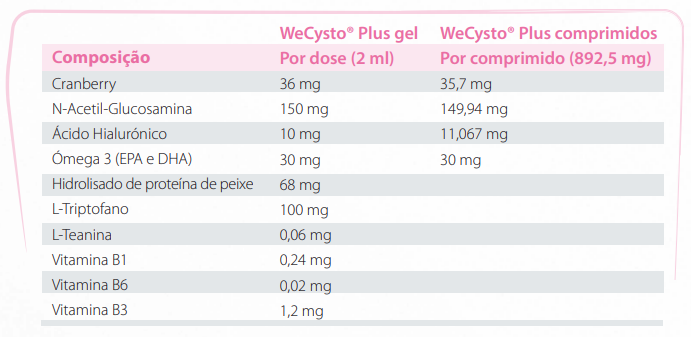
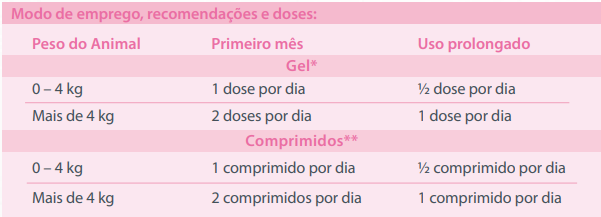

WeCysto® in Edible Gel and in Palatable Tablets, two options, with global action in Canine and Feline Cystitis, to support urinary function.
WeCysto® in Edible Gel and in Palatable Tablets, two options, with global action in Canine and Feline Cystitis, to support urinary function.
WeCysto® Plus is a complementary food developed to support urinary function, namely in the inner lining of the bladder and in inhibiting the fixation of bacteria in the urinary tract.
WeCysto® Plus Gel also contains ingredients to reduce and control stress levels, common in cats.
Wecysto Plus exists in two different options:
- In edible gel with 50 ml dosing bottle, for cats.
- In palatable tablets, 30 palatable tablets, for cats and dogs.
Cystitis is an inflammation of the bladder, which can have several causes, including bacteria, stress, “plugs”, defects in the protective layer of the bladder (Glucosaminoglycans – GAG's) and even neoplasms or polyps.
The most common causes of this inflammation vary according to species, gender and age. In the case of cats, compared to humans and dogs, cystitis is more common in the ages of less than 10 years, affecting equally females and males (being that in males it is an urgent situation due to the risk of obstruction).
Normally, cats that develop this type of pathology live in a house with no access to the outside, with several cats, are based on dry food and often have a weight higher than indicated for their height.
In young cats, about 75% of cystitis originates from “plugs” or stress (idiopathic cystitis), stones are responsible for 20% and only 5% are bacterial in origin. In senior dogs and cats, the main origin for this pathology is bacterial.
Cystitis is often idiopathic:
Treatment of cystitis depends on its cause:
- Urolithiasis requires removal and/or dissolution of stones
- Bacterial infections require the use of a suitable antibiotic
- Idiopathic involve a multimodal environmental modification (MEMO)
Treatment should always be Multifactorial
In feline cystitis, being a pathology with a strong component associated with stress, treatment should always be multifactorial:
- Environmental enrichment and correction of conflict situations to reduce stress
- Decreased urinary concentration through incentive measures to increase cats' water intake
- Pain/inflammation control and reinforcement of the often damaged bladder lining.





 Free shipping in 24-48h for orders over 49 €!
  Client Support:
  WhatsApp