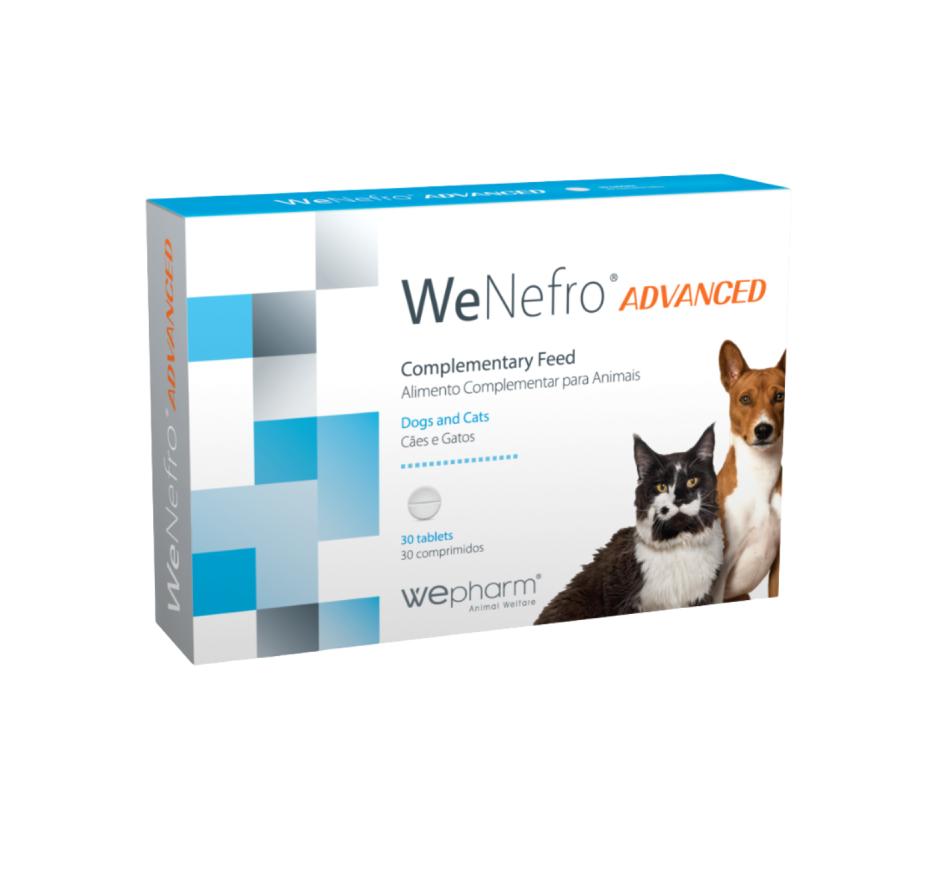
Chronic Kidney Disease (CKD) is common in older dogs and cats, and is the most common kidney disease in geriatrics. It occurs when there is functional and/or structural damage to one or both kidneys and when it has been present for more than 3 months.
WeNefro Advanced® combines a group of substances that allow broad control of the degenerative processes that lead to the progression of CKD.
Capable of reducing the development of fibrosis, as well as reducing hyperphosphatemia and uremia, it helps control blood pressure and intestinal transit, also providing essential vitamins for this condition.
Common aspects in CKD:
- Fibrosis
- Hypertension
- Hyperphosphatemia
- Uremia
- Proteinuria
- Constipation
- Weight and appetite loss
- Lethargy
- Dehydration
- Polyuria
- Polydipsia
- Vomiting
WeNefro® ADVANCED enables a multi-support approach to CKD treatment:
- Acidosis
- Nitrogen compounds
- Hypertension
- Fibrosis
- Hyperphosphatemia
- Bowel, Constipation and appetite

Complementary food, in tablets, for dogs and cats with ingredients that contribute to the maintenance of kidney function.
Complementary food, in tablets, for dogs and cats with ingredients that contribute to the maintenance of kidney function.
Chronic Kidney Disease (CKD) is common in older dogs and cats, and is the most common kidney disease in geriatrics. It occurs when there is functional and/or structural damage to one or both kidneys and when it has been present for more than 3 months.
WeNefro Advanced® combines a group of substances that allow broad control of the degenerative processes that lead to the progression of CKD.
Capable of reducing the development of fibrosis, as well as reducing hyperphosphatemia and uremia, it helps control blood pressure and intestinal transit, also providing essential vitamins for this condition.
Common aspects in CKD:
- Fibrosis
- Hypertension
- Hyperphosphatemia
- Uremia
- Proteinuria
- Constipation
- Weight and appetite loss
- Lethargy
- Dehydration
- Polyuria
- Polydipsia
- Vomiting
WeNefro® ADVANCED enables a multi-support approach to CKD treatment:
- Acidosis
- Nitrogen compounds
- Hypertension
- Fibrosis
- Hyperphosphatemia
- Bowel, Constipation and appetite




 Free shipping in 24-48h for orders over 49 €!
  Client Support:
  WhatsApp