Benefits | NewPet

VECTRA 3D and VECTRA FELIS: State-of-the-art protection for dogs and cats

Submitted by bruna on

Anyone who has a pet knows that their health and well-being always come first.
Preventing external parasites, such as fleas, ticks, and mosquitoes, is essential not only for the comfort of our companions, but also to avoid serious diseases that can be transmitted by these insects.

It's in this context that VECTRA 3D and VECTRA FELIS emerge, next-generation pipettes developed to offer advanced, practical, and effective protection. These products were specially designed to meet the specific needs of dogs and cats, providing a powerful barrier against the main parasites that threaten the health of our four-legged friends.

More than just antiparasitics, VECTRA pipettes stand out for their innovative technology, fast and long-lasting action, ensuring peace of mind for owners and a better quality of life for animals.


Vecta 3D

THE LATEST GENERATION PIPETTE THAT REPELLS AND KILLS PARASITES BEFORE THEY BITE

  • Repels and kills parasites
  • Fleas, ticks, mosquitoes and more…
  • Easy to apply differentiating pipette
  • Water resistant
  • Protection for 1 full month

Vectra 3D provides a strong repellent effect thanks to its unique composition. It acts directly on your dog's fur and skin.
By simple contact, the parasites are repelled and die without biting.

Vectra 3D has a patented applicator, elongated to move the hair away for easy application to the skin.

CHOOSE THE RIGHT PIPETTE FOR EACH DOG'S SIZE AND WEIGHT

Vectra 3D - Options

SEE PIPETTES


Vecta Felis

THE LATEST GENERATION PIPETTE THAT KEEPS YOUR CAT AND YOUR HOUSE FREE OF FLEAS

  • Kills fleas in 2 hours
  • Eliminates eggs, larvae and pupae from the environment for 3 months
  • Easy to apply differentiating pipette
  • 1 month protection against fleas

Vectra Felis acts directly on the fur. Fleas die quickly through simple contact without biting.

Vectra Felis has a patented applicator, elongated to move the hair away for easy application to the skin.

PIPETTE WITH SINGLE PRESENTATION
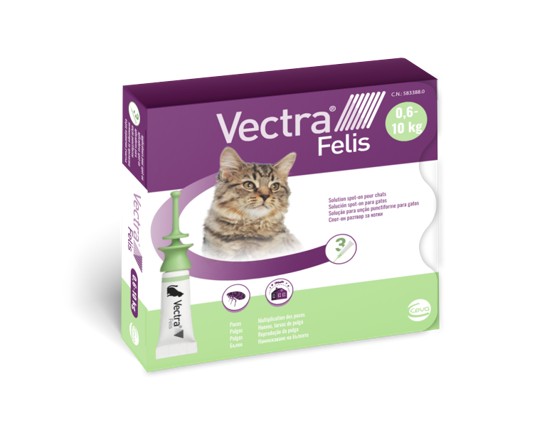
Vecta Felis

SEE PIPETTES

Bea Lopes
NewPet Team

The Importance of Hydration

Submitted by info on

One of the fundamental care to take with our pet is to ensure good hydration.

Not only in the hottest periods, but regularly throughout your life.

In this way we help prevent future health problems.


Advantages of Hydration

In dogs, hydration helps ensure good metabolism, improving food digestion and breathing.

Water also helps the dog to release toxins and regulates his body in times of great heat.

In cats hydration is still important, but not so much because of the heat, because cats do not suffer as much as dogs with high temperatures.

The great advantage is in preventing future problems in the urinary system, very common in our feline friends.


Tips to Keep Our Animal Hydrated

dogs

We must take special care of our dogs so that they do not suffer from dehydration:

  • When we go for a walk, we should take a bottle of clean water to hydrate our dog or even walk him in parks with specific water fountains for dogs.
  • On the hottest days, avoid physical exercise with the dog, or opt for less hot periods of the day.
  • On car trips, take regular breaks to give our little friend water.

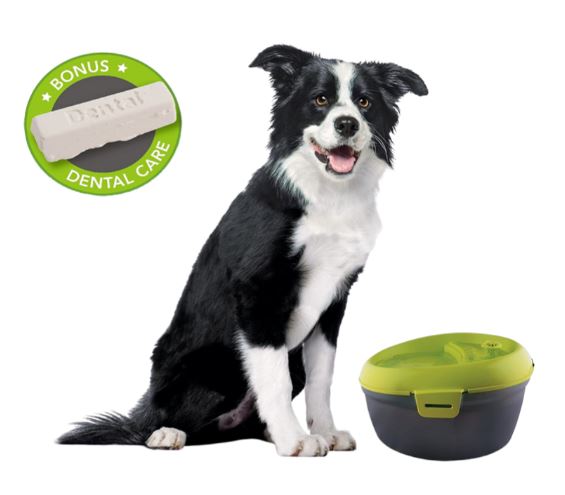
water fountain for dogs

- Stimulates the increase of water consumption of our dog.
- Helps in oral hygiene, using the dental bar in the water.


Cats

To keep our cat well hydrated, we can help in several ways:

  • Always provide fresh and clean water or even have a source for cats. As a rule, running water makes cats drink much more often.
  • Moisten our cat's dry food with some fish or chicken broth or even hot water.
  • Regularly give wet food, suitable for cats.

water fountain for cats

- The perfect way for our cat to drink more water, as all cats prefer running water.
- Helps in oral hygiene, using the dental bar in the water.

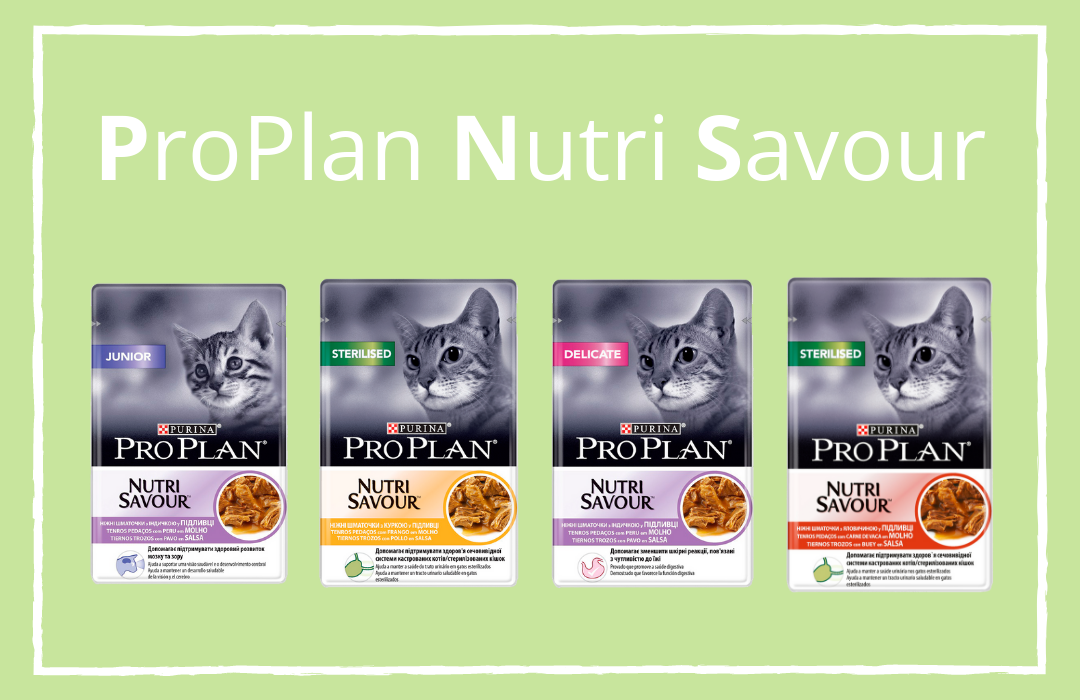
Wet food for cats

Natural food that contains meat and raw ingredients of the highest quality, steamed to guarantee the conservation of all its nutritional and natural properties. Complete and balanced wet food that contains all essential nutrients. There are several flavors, for kittens, spayed cats or those with sensitive digestion.

Bruna Fernandes
NewPet Team

Physical Activity for Dogs: Advantages

Submitted by info on

Physical activity for dogs is a basic need, a way to strengthen their instincts.

As we all know, physical exercise is a stimulus not only for the body, but also for the mind. It is essential to avoid the stress that can be developed by being alone or closed for long periods of time.

The right amount of exercise for our dog always depends on its breed, age and the existence of any disease, but it should be part of our bigeye's routine.

Another very important factor is regularity. For the good development of our animal, we must establish a constant and daily routine.

Discover 4 benefits of physical activity in our dogs.


Keeps fit and health

For canine health, physical activity is essential.

Canine obesity, cardiorespiratory difficulties and predisposition to diabetes are diseases that have increased. Physical exercise helps to prevent early diseases and prolong longevity.

In addition, it strengthens muscles, improves blood circulation and causes better tissue oxygenation, helping to cleanse cells of toxins. This makes the dog more relaxed, peaceful and happy.


avoid stress

Signs of stress and instability in the dog are perceived through unnatural behaviors.

When our dog becomes more aggressive, anxious, depressed or does not allow other people to approach the owner, he may be under stress.

Eating your own feces or chasing your own tail are signs of accumulating energy.

Exercising relieves dogs of tension and excess energy.


Strengthens bonds and increases respect for the owner

Dogs that exercise more regularly with their owners tend to be more cooperative, accepting commands and obedience training better.

The walks make our dog learn to respect the established hierarchy, strengthening the relationship between us and our bigeyes.

He needs to trust us. By guiding the animal through the streets, side by side, and not letting it go ahead or diverting its focus from the walk, our dog learns to respect us.


Builds good habits and avoids destructive behavior

Physical exercise creates good habits in our dog.

If our little friend starts to respect us more, has time to eat, exercise and play, it will be easier to educate him.

And the best thing is to introduce these habits from a young age.

Exercises use up the dog's energy and stimulate the mind, preventing our dog from gnawing and destroying furniture, clothes, doors, gardens and walls.

Bruna Fernandes
NewPet Team

Advantages of adopting an older animal!

Submitted by info on

Deciding to adopt a new animal for the family is an important moment.

We must be aware of the responsibilities that this entails and what challenges we will face.

Adopting an older animal may be a better option and may make more sense for our lives.

Get to know the main advantages of adopting an animal already in adulthood.


Animal with a strong personality

When a dog or cat is already in adulthood, it means that its temperament is already known, unlike a baby animal where it is not yet possible to discover what its personality will be at this stage.

When adopting an adult animal, we can ask their caregivers for their opinion and find out if the animal is more independent or more in need of pampering and choose the one that best fits our personality.


Good option for those with children

When an animal is already in the adult stage, it is usually more patient.

For those who have restless children, it may be the best option as they will put up with their antics more tolerantly.

The ideal would be to even indicate that we have children and that we want to adopt an affectionate animal for them.


give less work

When a dog or a cat is still a baby, there are care that we cannot forget. They need more attention and supervision. In addition to taking care of their food and their good growth, we need to give them more attention and play with them more.

An adult animal is usually more serene and independent, which turns out to be an advantage for those who have little time.

In terms of health, it can also be more advantageous, since an animal that is to be adopted as an adult is usually already vaccinated, dewormed, often sterilized. It will be time and money that we can save in the initial phase of your coming to our home.


Fewer incidents at home

Baby animals at home are always synonymous with endless pranks and games. Which could also mean more destruction back home.

Torn curtains, squeaky shoes or damaged sofa corners can be a reality that we have to accept.

With adult dogs and cats, this phase of destruction has passed and we will have a calmer animal at home.


Adopting is an act of generosity

We believe that when an animal is up for adoption in its adult phase, it is usually not their fault, but the people who went through their life and who did not know how to deal with them, opting for the sad reality of abandonment.

That's why we decided to welcome one of these little friends into our home, not only are we changing his life for the better, but we're making our life and that of our family more complete.

Let's make an adult animal happier?

Bruna Fernandes
NewPet Team

External Deworming - Cats

Submitted by info on

When we welcome a new furry companion into our family, we are responsible for their health and well-being. Along with vaccinations and proper nutrition, periodic deworming is essential for our friends to stay healthy.

It is necessary to establish an annual schedule of deworming, both internal and external to protect them effectively, always using products of proven quality and effectiveness, always with the approval given by our veterinarian.


Importance of Deworming

As far as parasites are concerned, we must apply the formula of better prevention than cure. It is much simpler and recommended to keep our pets protected from a possible infestation before waiting for them to appear and then starting to apply antiparasitics.


"We might not see them, which doesn't mean they're not there."

Parasites are difficult to notice when they are few and some require specific tests; if they are easily detectable on the skin (external parasites) or in the feces (internal parasites), it is a sign that the infestation may already be quite serious and, therefore, more expensive to eliminate. In the specific case of fleas, they can become really annoying and difficult to eradicate. They reproduce quickly and invade not only our animal, but can also spread to areas of the home (especially textiles such as rugs and sofas), forcing us to resort to powerful pesticides to get rid of them permanently.


Why are parasites so dangerous?

Parasites, whether internal or external, weaken our furry friends and cause all sorts of problems, such as unpleasant bites that can cause skin disorders. The most dangerous are the various diseases they transmit, some of which are potentially deadly. On occasions, fleas, lice, ticks and mosquitoes act as intermediaries for the internal parasites, transmitting them through the bite to the final host (dog, cat or human).


Diseases caused

These are some of the diseases that most affect cats due to lack of deworming:

  • Feline infectious anemia : Also known as hemoplasmosis or mycoplasmosis, it is a parasitic disease transmitted through fleas, ticks and mosquitoes, although they can also be transmitted through bites or wounds between cats. The bacteria that cause this disease adhere to red blood cells, which causes antibodies created by the animal's immune system to destroy these cells to fight the infection. The shedding of too many red blood cells produces anemia in cats. If not treated in time by a veterinarian, it can be fatal. It affects more severely cats that already suffer from immunosuppressive diseases. Symptoms include decreased appetite, fever, depression, weakness, pale color and weight loss.
  • Allergic dermatitis (FAD) : It is the most common condition caused by fleas and one of the most frequent dermatological problems in veterinary consultations. Flea bites are always uncomfortable and irritating, but many animals are especially sensitive to the saliva of this parasite. The itching and pain they feel makes them want to scratch non-stop, and they can even wound themselves. FAD causes alopecia, generalized itching, rashes, crusts, seborrhea, darkening of the skin in the affected areas and sometimes pyoderma lesions.

Other diseases such as Leishmaniasis and Filariasis , despite being more common in dogs, can also affect cats and other animals.

  • Leishmaniasis is a parasitic disease transmitted by the bite of the sand fly. Many infected animals do not show symptoms for months, years and even may not show them at any time and remain only carriers. The evolution of the disease depends on the reaction that each individual's immune system has to the infection. The symptoms are very diverse, we can find hair loss, skin wounds that take time to heal, epistaxis, weight loss and digestive problems, among others. This disease has no cure, but there are treatments to reduce symptoms and the animal can lead a normal life in many cases. However, the parasites remain in the body for life and relapses can appear.
  • As for Filariasis , it is transmitted through the bite of mosquitoes and, like Leishmaniasis, it is widespread in Spain, with the number of registered cases increasing every year. It is caused by worms measuring 15 to 40 cm that lodge in the heart and pulmonary arteries of our pets, obstruct the great vessels leaving the heart and affect the functioning of the heart valves. It can cause damage that affects important organs such as the lungs, liver and kidneys. Symptoms can take years to manifest and include lack of appetite, tiredness, weight loss, weakness, nosebleeds, coughing, swelling, and breathing problems. If not treated, it can cause death.

Many diseases that transmit the parasites have expensive and long-lasting treatments, requiring follow-up and control analyses. Antiparasitics are an inversion that will save us a lot of suffering in the long run, both for us and for our furry ones.


External parasites

There are many products on the market to protect our animals. Again we have to remember another popular saying, cheap can be expensive. We shouldn't skimp on something as important as the health of our pets. Applying products of dubious efficacy and origin can be useless, in addition to putting their lives at risk, since they are potent chemical substances that we apply topically or orally to the body. If we have questions about any product , we should always consult our veterinarian .

The products we will use will depend on each specific case. If we live in a rural or urban area, if we make frequent excursions to the countryside, the time of year (more should be applied in the warmer months). In the case of cats, although they do not leave the house, it is important to keep them protected, as the parasites can reach them through our clothes or shoes (something more common than we think) or, if we have a dog, through it.


When choosing a product, we must pay special attention to which external parasites it protects and for how long they take effect.

  • Pipettes : They are a relatively innovative product, quick to apply and their duration can vary between 2 and 6 weeks. The most common is a monthly application.

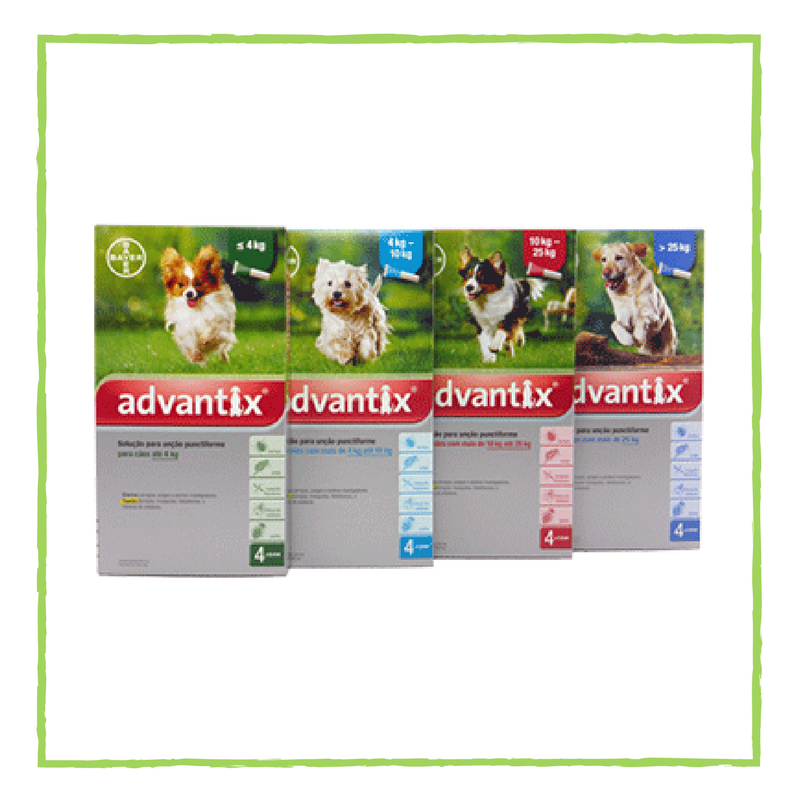
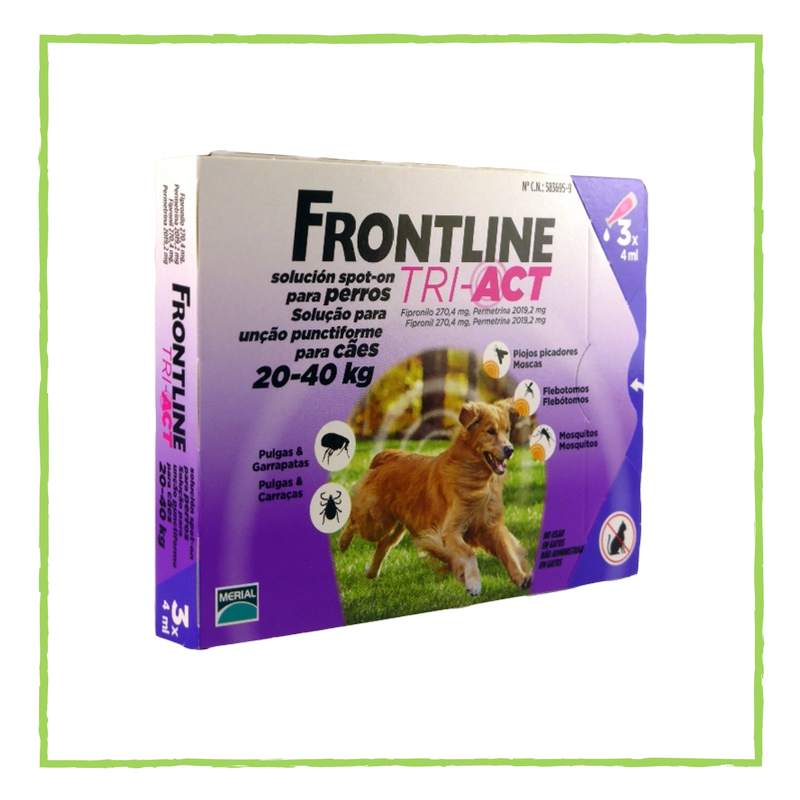
Advantage effipro Frontline Combo


  • Sprays : Their action is immediate and they are indicated especially when the animal is already infected by parasites. The application is more complicated as it must be sprayed against the grain to reach all areas. Absorption takes time.

Eliminate spray frontline spray


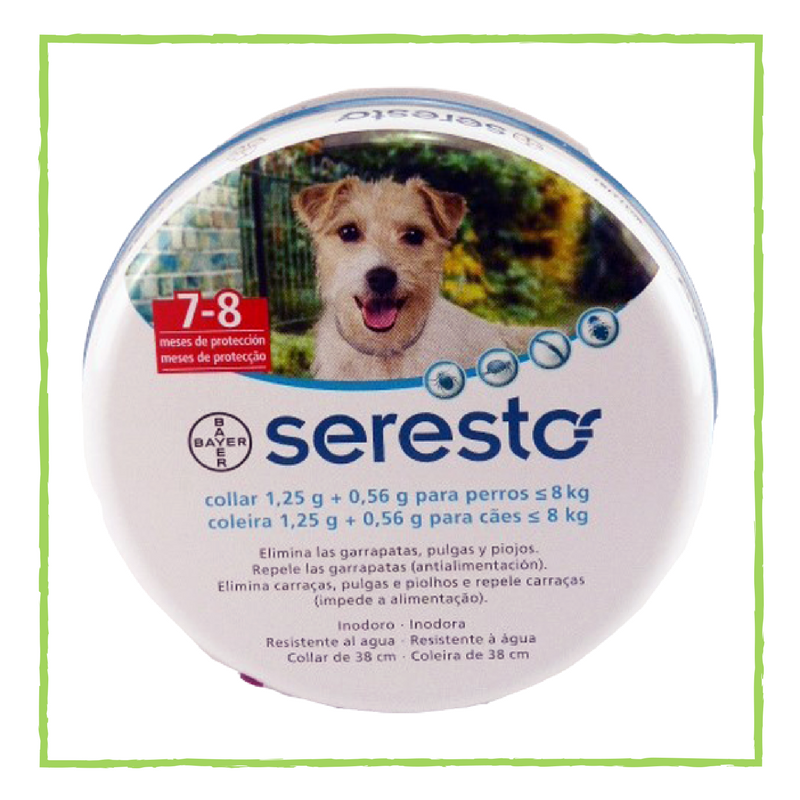
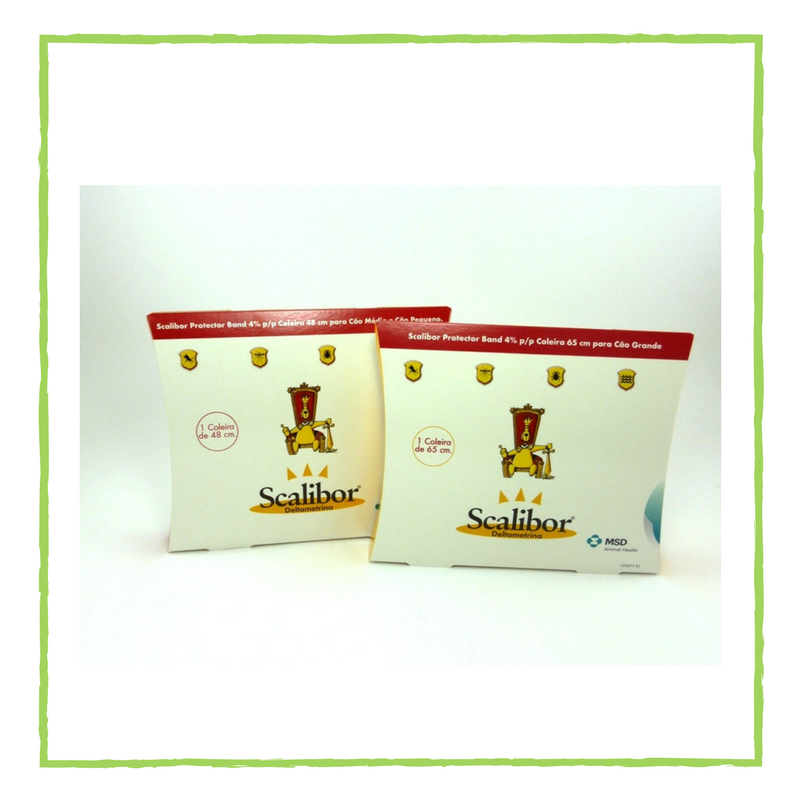
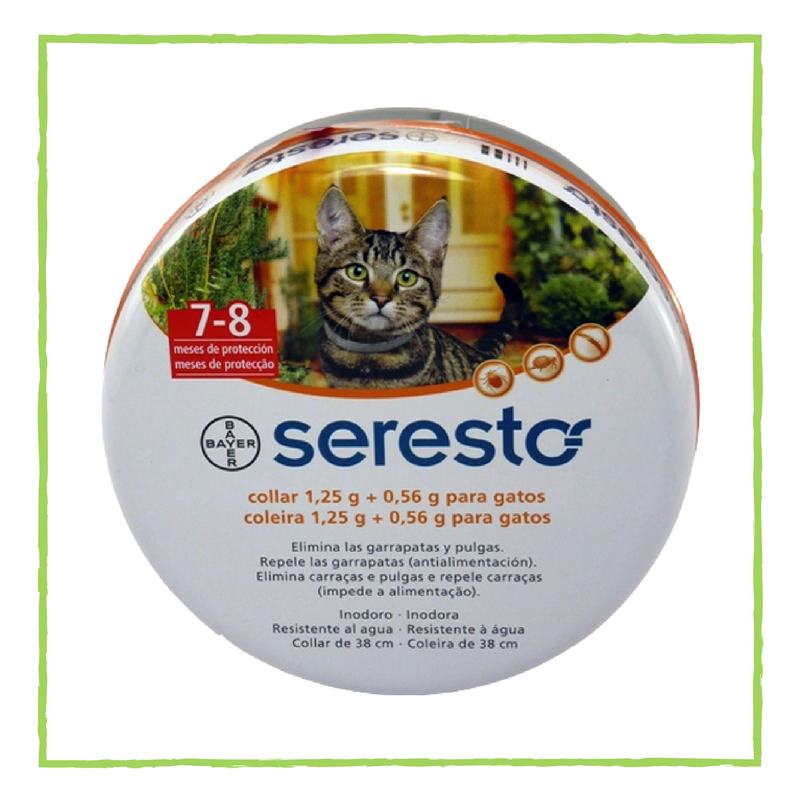
  • Collars : Comfortable and lasting between 3 and 8 months.


We must always read and follow the instructions for use and consult our veterinarian with any questions. He will be able to advise us on the most suitable product for our situation and the habits of our furry ones. We must keep them protected throughout the year, but in the hottest months it is advisable to combine more than one insecticide product for external parasites, for example pipettes and collar.


All products on external deworming for cats here .

Bruna Fernandes
NewPet Team

External Deworming - Dogs

Submitted by info on

Deworming is one of the essential care that we must have with our pets. It is essential to maintain the health of animals, as well as ours, as parasites can infest us too, especially children, the elderly and people with immunosuppression (compromised immune defenses).

Preventive action is the best posture.


ticks

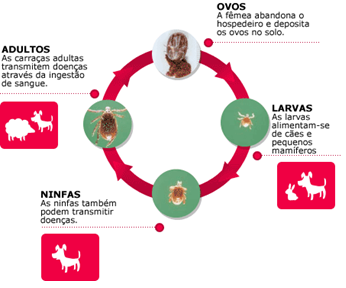
  • Ticks are found in a variety of places, such as bushes and vegetation, in forested areas, on grass and in tall grass in fields, parks and gardens.
  • Ticks climb to the top of leaves or grasses, where they wait for a possible host (dog) to pass.
  • If our dog passes through the vegetation where the ticks are, they will cling to its fur and move to the skin.

Tick bites cause stress and discomfort to our dog.

When an infected tick bites, it can transmit agents that can cause serious and potentially dangerous diseases for our dog.

Ticks can stay attached for days, but some dangerous diseases are transmitted almost immediately – which is why it is important to start by preventing your dog from biting.

how to remove ticks
  • If we find a tick on our dog, we must remove it quickly and as safely as possible.
  • With fine-tipped tweezers or a specific instrument for removing ticks, grasp the tick's head firmly at the point of attachment and as close to the skin as possible.
  • Then we pull the tick from the skin with a slow, steady and firm pulling motion. With some instruments, it is recommended to pull the tick with a circular twisting motion.
  • We should never squeeze the tick's body, as saliva can be injected into the animal while the tick is attached.
  • After removing the tick, we have to clean the affected area with mild soap and water.
  • If a small part of the tick separates, we have to remove it like a splinter.
  • Observing the affected site for a few days after removing the tick is essential. In case of inflammation we should always contact our Veterinary Doctor.

fleas

Fleas can transmit tapeworm larvae and infectious agents .

A parasitic infestation can result in

  • allergies
  • irritations
  • dermatitis
  • slimming
  • Diarrhea
  • Hair loss in certain areas of the body
  • Itching in the anal area, leads the animal to crawl, rubbing the anus on the floor. Small reservoirs of worm eggs are sometimes visible around the anus.
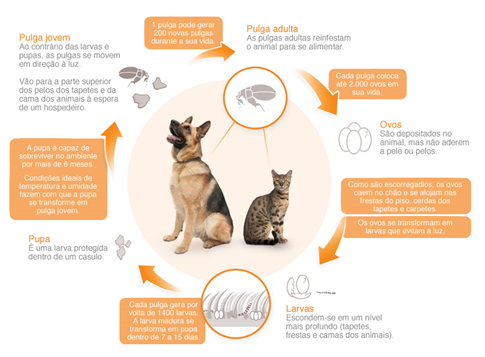
A flea can lay up to 50 eggs a day. For every flea you see on your pet, there are 200 fleas around it, in the fur, in the place where it sleeps, in the frequented places, etc.
Prevention is the best way to avoid the dire consequences of a flea infestation.

Why should we protect our dog from fleas?
  • Flea bites are irritating and stress your dog. Inflammation of the skin due to flea saliva (known as FAD – flea allergy dermatitis) is one of the most common causes of veterinary visits to dogs.
  • But it's not all. Fleas can transmit dangerous diseases to our dog, including taeniasis and bartolenosis. If flea infestations are severe, fleas can cause anemia.
  • Fleas can also bite humans and, if they are inside our homes, they can be very difficult to eradicate. Therefore, it is very important to protect our dog against fleas.
How dogs catch fleas
  • Our dog can easily catch fleas outside or through contact with other animals. When fleas are already inside our house, it is difficult to get rid of them.
  • After biting our dog, the fleas begin to lay eggs. Flea eggs fall from the dog's fur and begin to develop in the environment – for example on beds, rugs or sofas. Once developed, these new fleas jump back to our dog and the cycle continues – this is where the real problem begins, as the infestation is established in our home.
  • If we find fleas on our dog, there is probably an established infestation in the surroundings (and in our home), as the stages of development of new fleas occur in the animal's environment.
So prevention with a flea control drug like Advantix is an important part of flea control in dogs in general.

Mosquitoes / Sandflies

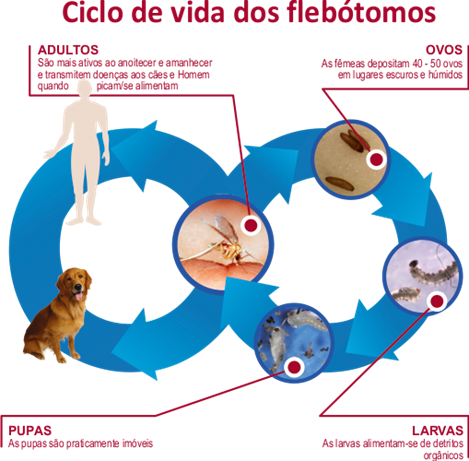
Sandflies are small insects, similar to mosquitoes, widely distributed in areas of sandy soils in temperate, subtropical and tropical climates. Only the female sand fly stings and 'sucks' the blood to develop the eggs. Sandflies can transmit leishmaniasis to our dog, a serious, potentially fatal disease.

How is leishmaniasis transmitted?
Through insects very similar to mosquitoes, but much smaller, called sandflies. These insects are particularly active at dusk and can transmit the disease by biting dogs to feed on their blood.
Is leishmaniasis transmissible to humans?
This disease can indeed affect humans. However, transmission is not done directly from dogs to humans.
For this to happen, it is necessary:
  • A sand fly stinging a dog with leishmania and becoming infected when it feeds on blood
  • Allow approximately a week for the leishmania found in sandflies to become infectious
  • That same sand fly biting a person
  • The person's immune system is weakened
Thus, living in an endemic area of the disease, we must take precautions against sandfly bites (use insect repellents, appropriate mosquito nets, avoid having the skin exposed at dusk and dawn and disinfect the premises).
These measures are also valid for dogs.
Prevention
It is important to prevent sandflies from biting dogs. By reducing the number of bites to a minimum, the risk of contracting the disease is reduced as much as possible. Using deworming agents suitable for this purpose, spot on pipettes , collars , etc.
It is scientifically proven that Advantix prevents sandflies from biting your dog for up to 3 weeks after application, reducing the risk of transmission of this disease by infected insects.
The incidence of bites occurs in particular at dusk, when the sandflies are most active and occurs mainly in the spring, summer and autumn months. Thus, if during this period we “protect” our dogs (eg kennel with a suitable mosquito net, that is, very fine mesh), we will be reducing the possibility of being bitten.
Although there are vaccines for this disease, we recommend prevention through the application to dogs of antiparasitic drugs with a proven repellent effect against sandflies. Although you cannot guarantee 100% protection, you can reduce the risk of contracting the disease. For this, it is essential that we follow the recommendations of the application intervals.
We must be careful when traveling with our dog. If we want to move to areas where leishmaniasis are endemic, we must protect our animals in advance.

Recommended Products

These are some products that we recommend for external deworming of dogs:

  • Spot-On Pipettes

Advantix effitix Frontline Tri-Act

  • collars

Seresto Scalibor

Find all external dewormers for dogs here .

Bruna Fernandes
NewPet Team